
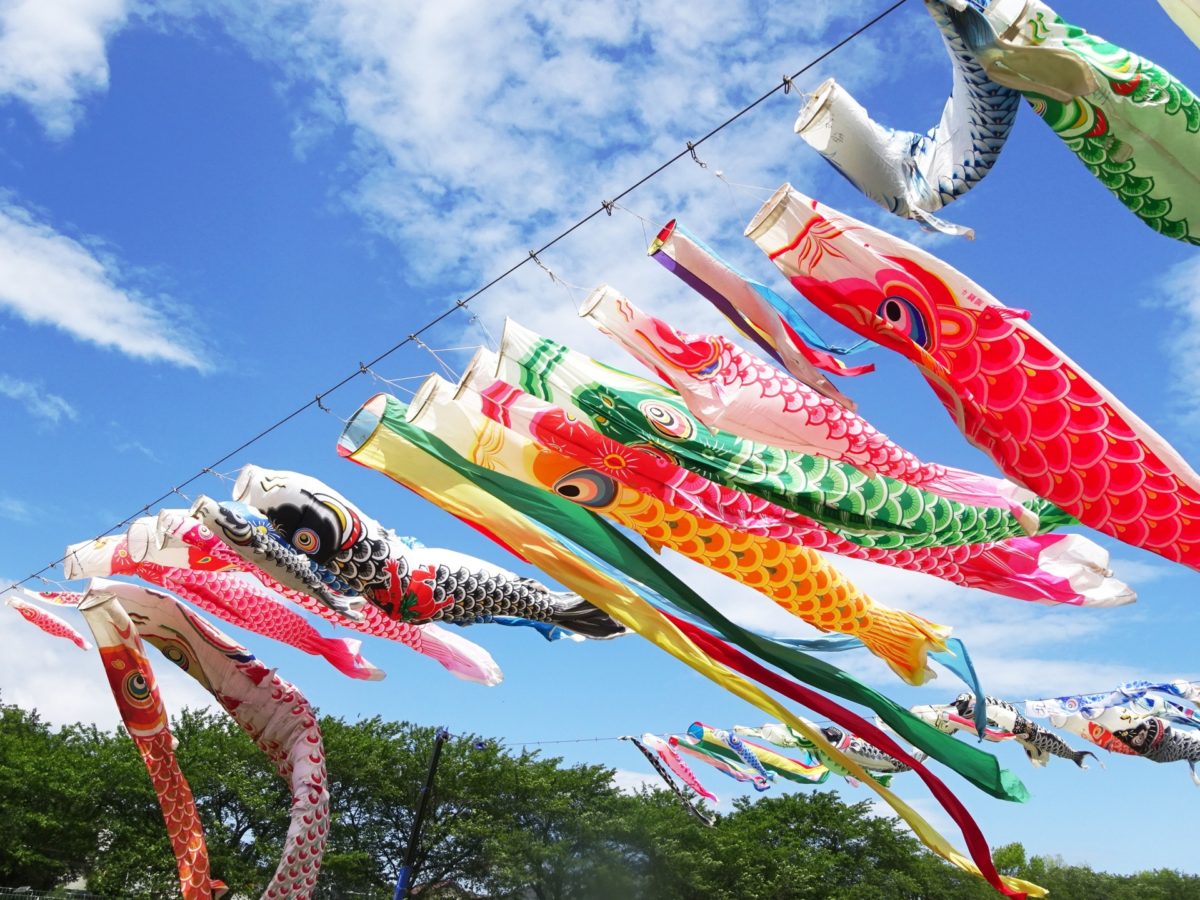
May in Japan is a time of vibrant colors and joyous celebrations, marking a period known as Golden Week. Among the festivities, two traditions stand out: 鯉のぼり (Koinobori) and 子供の日 (Children’s Day). These celebrations are steeped in history and cultural significance, offering a glimpse into Japan’s rich heritage.
The Sky’s the Limit with Koinobori

Koinobori, or carp streamers, are a mesmerizing sight in Japan’s springtime skies. These colorful windsocks, shaped like carps, flutter gracefully in the breeze, symbolizing strength, perseverance, and the hope for children to grow up healthy and strong1. The tradition is linked to an ancient Chinese legend where a carp swims upstream and transforms into a dragon, embodying success and advancement2.
Children’s Day: A National Affair

On May 5th, Japan celebrates 子供の日 (Children’s Day), a national holiday dedicated to honoring children’s personalities and their overall happiness3. It’s a day when families pray for their children’s well-being and success in life. The holiday has evolved from Tango no Sekku, originally a celebration for boys, to include all children3.
Where to Witness the Koinobori Magic

During Golden Week, especially around Children’s Day, you can see koinobori almost everywhere. But for a truly spectacular view, head to the Koinobori Festivals. One of the most famous is the Tsuetate Onsen Koinobori Festival in Kumamoto Prefecture, where thousands of carp streamers swim across the sky above the hot spring town4. The festival typically runs from April 1st to May 6th, with special light-up events in the evenings5.
Getting Your Own Koinobori

If you’re in Japan and want to take part in this tradition by purchasing your own koinobori, the best time is during March and April, right before Children’s Day. While they’re seasonally available, some places offer them year-round. You can find a variety of koinobori, from traditional designs to modern interpretations, at local markets, specialty shops, and even online6.
Embrace the spirit of May in Japan by joining in the koinobori festivities and reflecting on the cherished values they represent. Whether you’re gazing at the carps dancing in the wind or celebrating the joys of childhood, these traditions are a testament to Japan’s enduring cultural legacy.




Leave a Reply